01 / Orient
Know where to start.
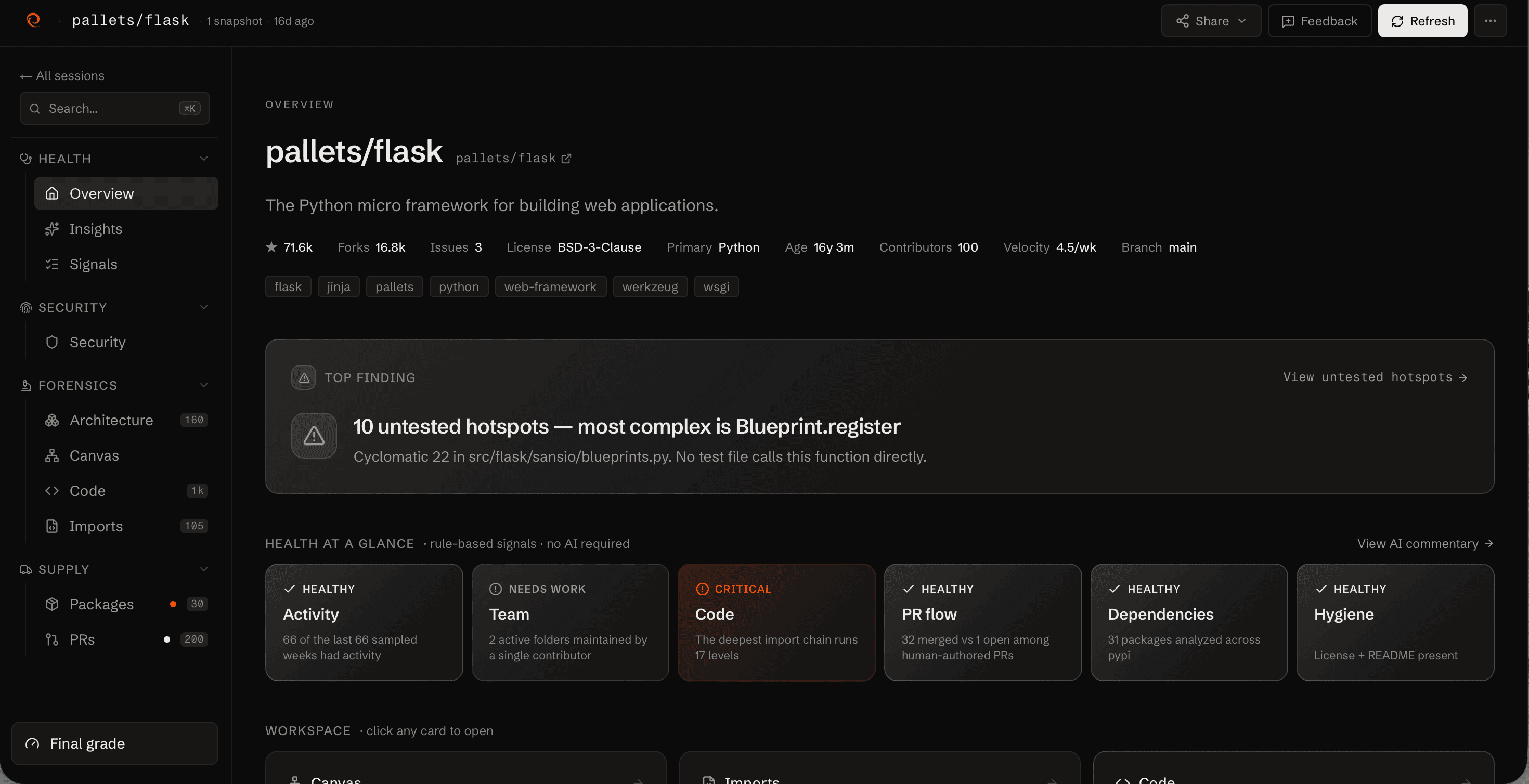
Turn a repository into a shared map of health, history and the findings that deserve attention first.
- Computed top finding
- Health across every analysis lens
Deterministic codebase intelligence
CodeTrawl turns structure, history, security and change impact into traceable evidence before your next decision.
Sweeping your own repo takes a free account — we'll keep the URL and run it the moment you land. Or read one already swept, no account at all.
GUIDED PRODUCT TOUR
Stay in context as CodeTrawl moves from orientation to change impact, security and supply-chain health.
01 / Orient
Turn a repository into a shared map of health, history and the findings that deserve attention first.
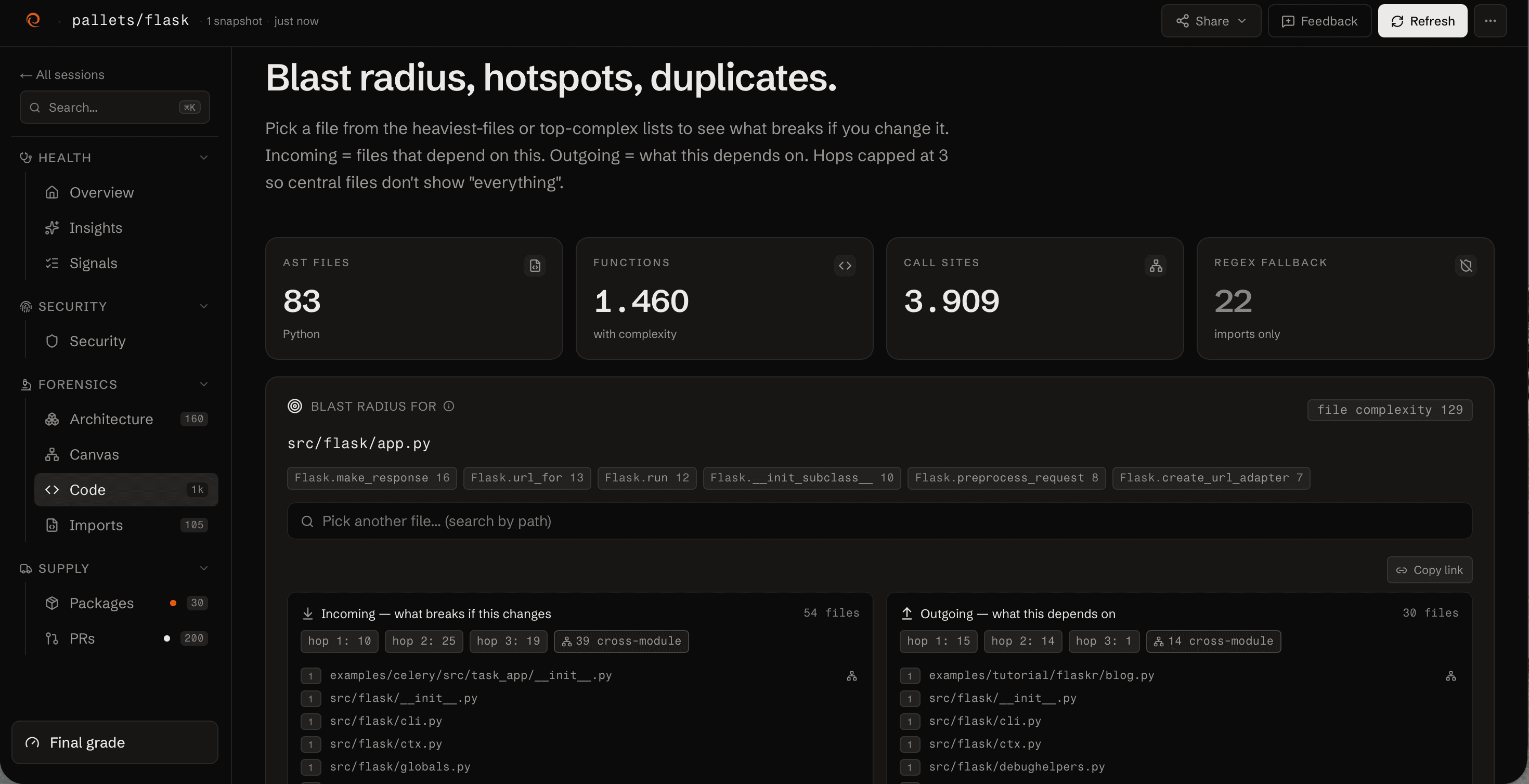
02 / Change
Follow callers, dependents, complexity and untested paths before a local change becomes a system-wide surprise.
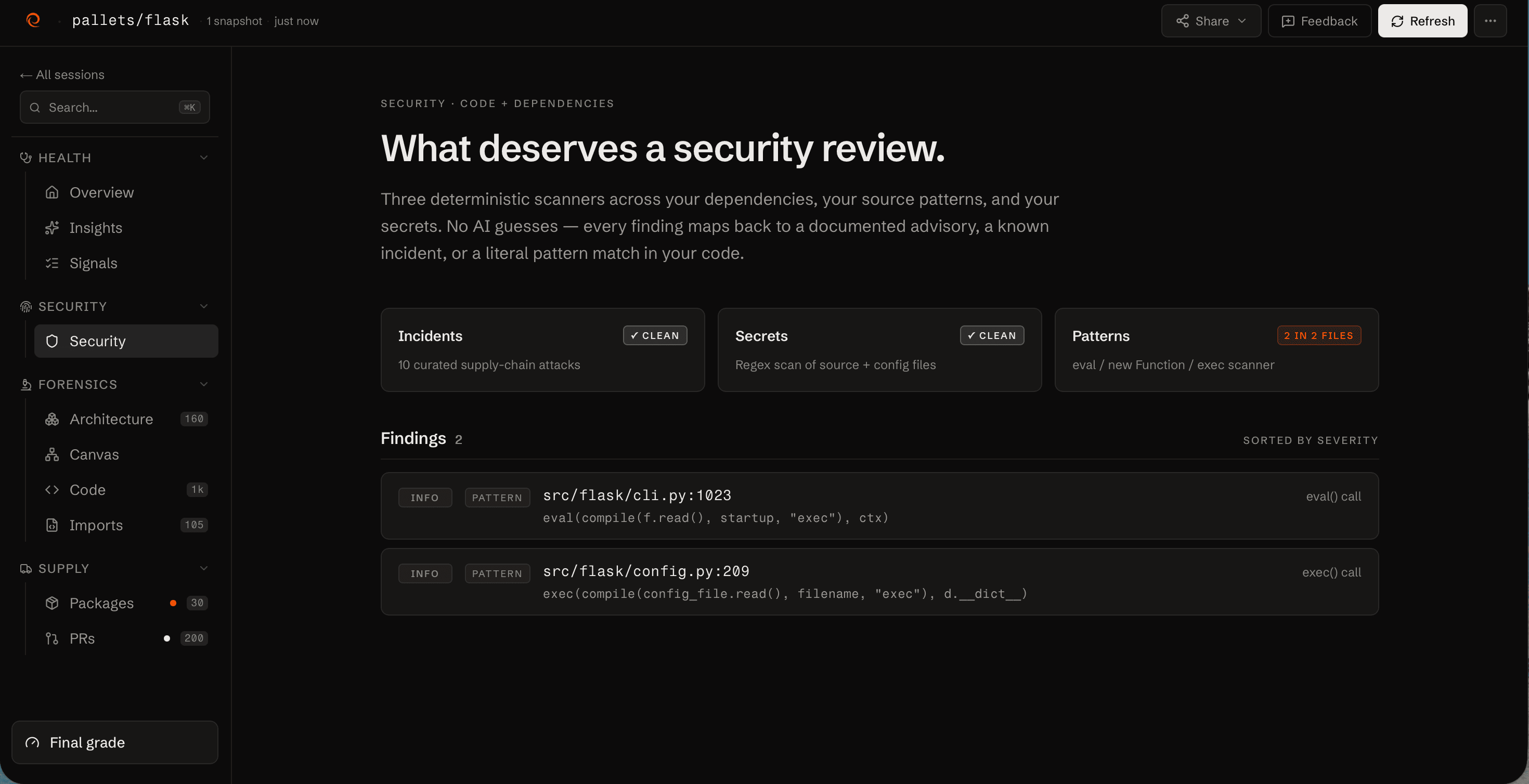
03 / Review
Security findings name the pattern, location and evidence. Your team reviews the same facts the product used.
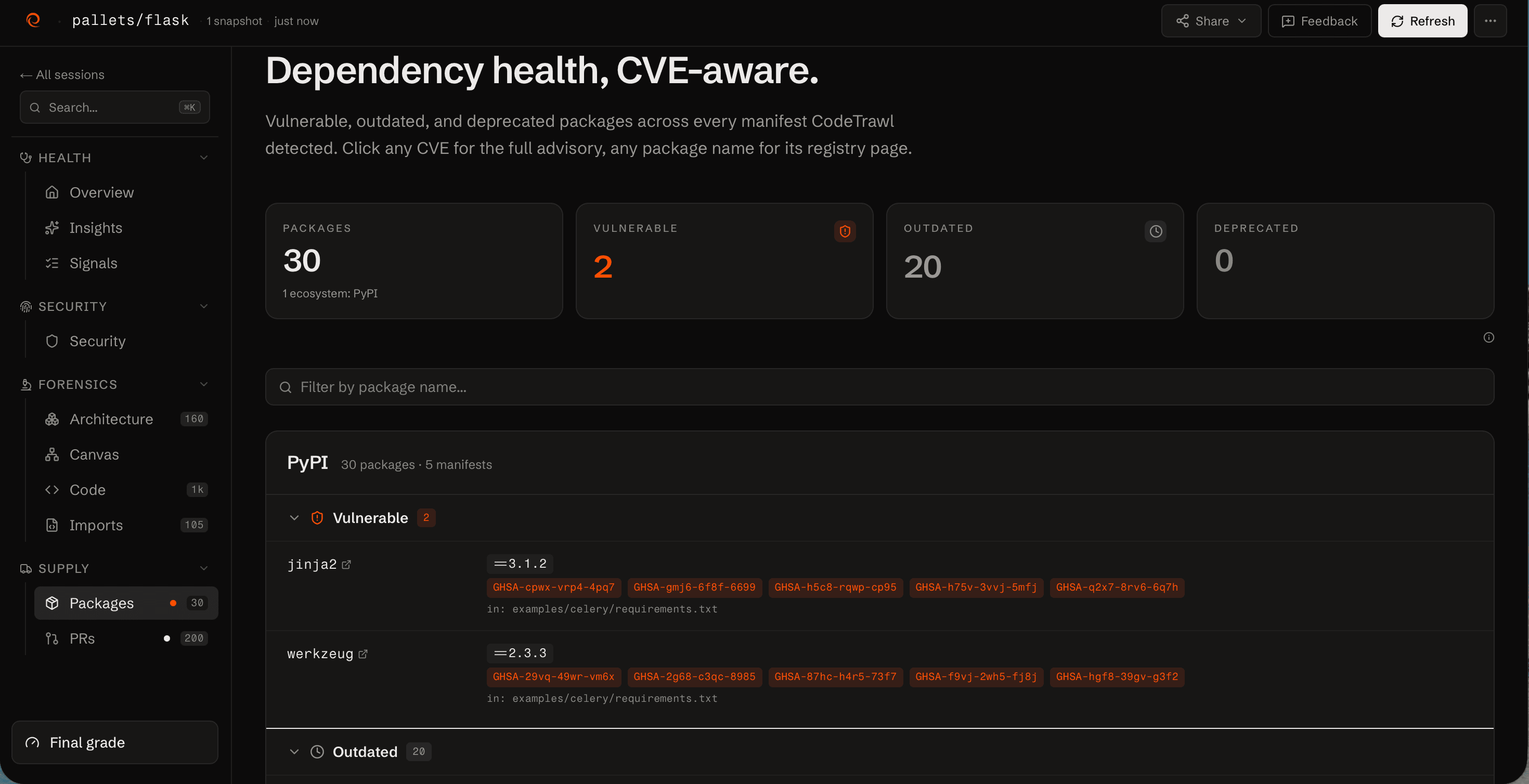
04 / Maintain
Find vulnerable, outdated and deprecated packages across npm, PyPI and Cargo without losing registry context.
HOW THE READ IS BUILT
Narration is optional. The analysis remains useful with every AI feature switched off.
AST structure across seven languages
Calls, imports, history and ownership
34 deterministic repository signals
Evidence at file, function, line or package
TRUST MODEL
AI can explain a result. It cannot create one, strengthen one or decide what is true.
Read the security modelRepository facts are computed before anything is explained.
Every material finding points back to a file, function, line or package.
Narration can clarify a result. It cannot create or upgrade one.
OPEN REPORTS
Real repositories and computed findings. No account required.
START WITH THE CODE
Analyze one repository free. Private repositories included.
Sweeping your own repo takes a free account — we'll keep the URL and run it the moment you land. Or read one already swept, no account at all.